
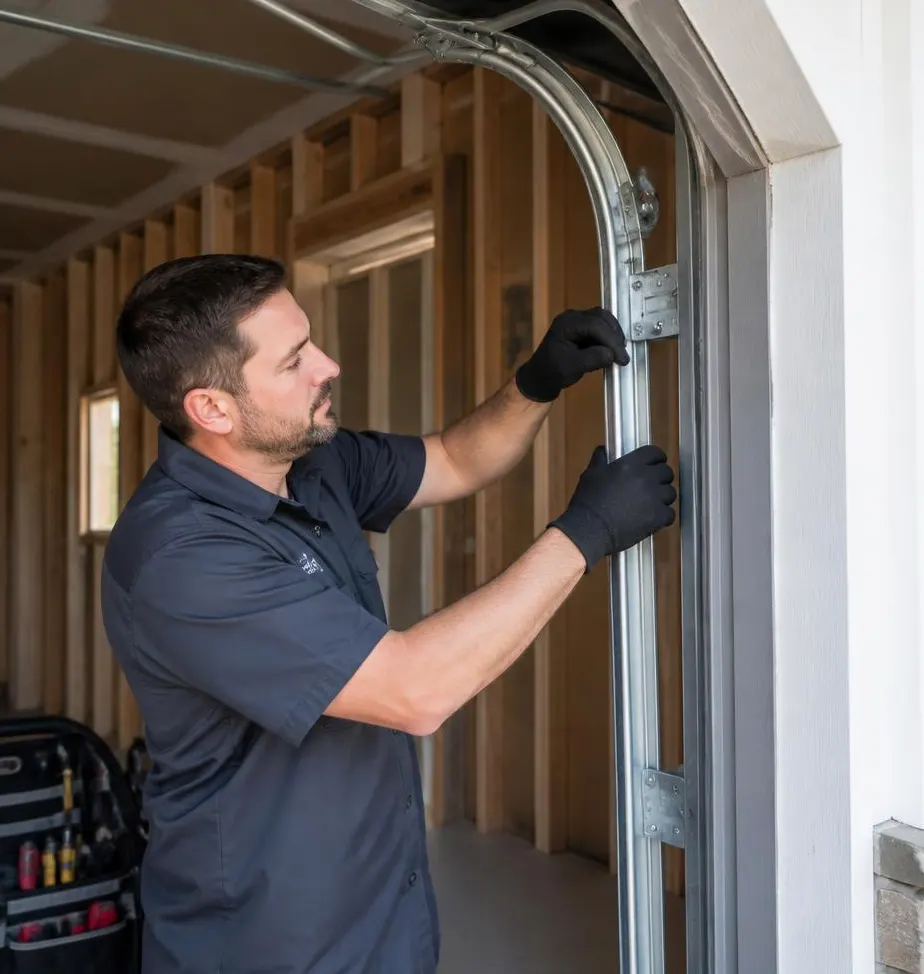
What a Service Call for a Noisy Opener Usually Looks Like
On a typical visit around Fernandina Beach and Amelia Island, the complaint is almost always the same: "it used to be quiet, now it sounds like it's going to fall out of the ceiling." What we usually find is a combination of things, not one single culprit. Chain-drive openers have stretched and need re-tensioning. Rollers that were fine a year ago are now pitted with rust from salt air and grinding in the track. Lag screws in the ceiling mount have worked loose from vibration. And on older wood or steel doors that have swollen slightly from humidity, the door is binding just enough to make the opener strain and bang with every cycle. None of this happens overnight—it builds up over a season of heat, moisture, and storms, which is why late in the year is a good time to run through a full check before winter cold fronts and next year's hurricane season stress the system again.
Tools You'll Need
- Socket wrench and screwdriver set
- Silicone-based garage door lubricant (not WD-40 or household oil—they attract dust and wash out fast in coastal humidity)
- Stepladder
- Work gloves and safety glasses
- Level
- Flashlight
Step-by-Step: From Quick Fixes to a Belt-Drive Swap
- Tighten everything first. Climb up (safely) and check every bolt on the opener's ceiling mounting bracket, the rail connection, and the bracket on the wall. Vibration loosens these over months of use, and a loose mount alone can cause rattling you'd swear was a motor problem. Homeowner task.
- Lubricate the moving parts. Apply a silicone-based lubricant to the chain or screw drive, the hinges, and the rollers. Skip anything petroleum-based; in salt air it gums up and collects grit faster than it should. Wipe off excess so it doesn't drip onto the floor. Homeowner task.
- Inspect the rollers. Look for flat spots, rust pitting, or cracked nylon. Plastic rollers in decent shape can be lubricated; rollers that are visibly rusted or chipped should be swapped for nylon rollers with sealed bearings, which hold up far better near the coast than bare steel. Replacing a roller or two is manageable for a homeowner comfortable with a ladder and a wrench, but if more than a couple are shot, or if the track itself is bent, that's a job for Cable & Roller Replacement done by a technician—pulling a track section with the door still under spring tension is not something to improvise.
- Check chain or belt tension. A chain that's too loose will slap the rail with every open and close. Most openers have a tensioning bolt described in the manual; a quarter-inch of play is usually about right. Over-tightening strains the motor, so this is a "go slow and check twice" adjustment. Homeowner task, if you're comfortable following the manual.
- Add vibration isolators. Rubber isolator kits between the opener's mounting bracket and the ceiling joist absorb a surprising amount of noise transfer into the house, especially in rooms above or beside the garage. These are inexpensive and install in a few minutes. Homeowner task.
- Check for binding or off-track movement. Disconnect the opener (pull the emergency release) and move the door by hand. It should glide evenly with no sticking points. If it binds, drags, or feels like it's rubbing—common after a humid stretch when a wood door swells slightly, or when a track has shifted after a storm—that's an alignment or off-track issue. Technician job. Forcing a binding door with the opener motor is what eventually burns out gears or snaps a cable.
- Inspect springs and cables. If the noise is a loud bang or thud rather than a grinding or rattling sound, it may be spring-related, not opener-related. Torsion springs are under extreme tension and are not a do-it-yourself repair under any circumstances. Technician job, no exceptions.
- Consider a belt-drive conversion. If you've done all of the above and the opener is still loud, especially an older chain-drive unit nearing the end of its life, a belt-drive opener is usually the real fix. Belt drives run noticeably quieter, handle humidity swings without the metal-on-metal noise a chain develops, and most current models come with battery backup, which matters here when storms knock out power mid-cycle and you need the door to still open. Technician job—this involves removing the old unit, matching the new opener to your door's weight and wind-load rating, and wiring in safety sensors correctly.
Where the Homeowner Line Really Is
Lubrication, minor tightening, roller swaps on a door that already moves smoothly, and vibration isolators are all reasonable weekend projects. Anything involving springs, cables, bent track, a door that's binding or off track, or installing a new opener crosses into technician territory—partly for safety, and partly because getting the tension or alignment slightly wrong just creates a new noise six months later.
When to Call Precision Garage Door of Fernandina Beach
If you've lubricated and tightened everything and the door is still loud, or if you notice grinding, binding, or a door that looks like it's sitting unevenly in the track, it's time to call us. We offer Garage Door Maintenance & Tune-Up visits that cover spring balance, track alignment, hardware torque, and lubrication in one trip, and if your opener is past its prime, we handle Garage Door Opener Installation for a quieter belt-drive unit sized correctly for your door and our wind-load requirements. We'll tell you honestly whether you need a tune-up, a part replaced, or a new opener—not whichever is most expensive.
If your garage door opener in Fernandina Beach, FL has gone from a quiet hum to a daily headache, give Precision Garage Door of Fernandina Beach a call and we'll get it fixed right the first time.